China’s rapid growth in rooftop solar is changing how households and businesses plan low-carbon heating. This guide examines how to integrate solar panels with a heat pump in real Chinese buildings, not only in ideal diagrams. The approach connects photovoltaic generation, heat-pump capacity, thermal storage, electrical controls, and household demand.
Dr. Jan Rosenow, Director of European Programmes at the Regulatory Assistance Project, has said, “Heat pumps are a key technology for decarbonising heat.” His statement reflects the technology’s importance, but integration requires careful design. A 10-kilowatt solar array may produce abundant electricity at noon, while a heat pump often runs during colder mornings and evenings. That mismatch matters.
Timing matters most.
A practical system can use smart controls to heat water when solar output is high. A buffer tank may store useful thermal energy for later hours. However, oversized storage can increase cost, standing losses, and installation complexity. It is not automatically better.
This guide considers China’s climate differences, from humid southern provinces to cold northern cities. It also discusses roof orientation, seasonal solar production, heat-pump coefficient of performance, grid interaction, and backup heating. Real performance depends on insulation, emitter temperature, household habits, and maintenance quality. Product labels alone cannot predict annual savings.
Some assumptions may prove imperfect. Weather changes. Occupancy changes. Electricity prices change. Therefore, reliable planning needs measured consumption data, local solar estimates, and professional commissioning. The goal is not simply to connect two technologies. It is to create a balanced system that uses clean electricity intelligently, remains comfortable, and performs reliably over many winters.
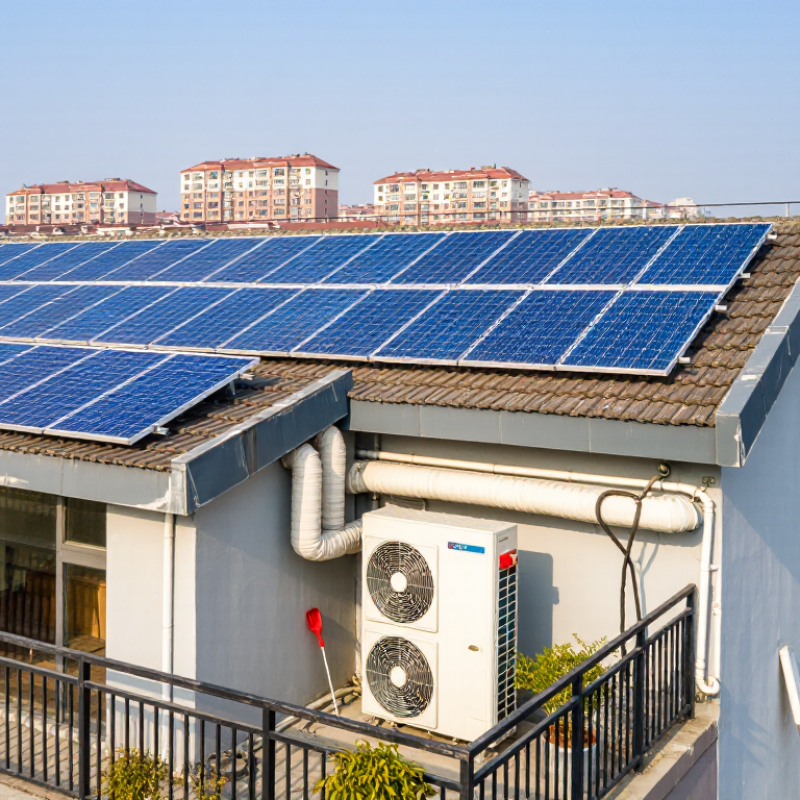
Solar panels and heat pumps work together by sharing clean daytime electricity. Panels produce the most power around midday. A heat pump can use this energy to heat water, warm rooms, or cool indoor spaces. It moves heat instead of creating it directly, so electricity demand is often lower than with resistance heating. The system performs best when its schedule matches solar production. Still, winter output can fall sharply in northern China.
A practical design begins with a local load assessment. Roof direction, shading, insulation, climate, and household routines all matter. In Shanghai, humidity and cooling demand may dominate summer use. In colder regions, larger radiators or low-temperature floor heating can improve heat pump efficiency. A qualified installer should check seasonal COP, cable capacity, grounding, and protection devices. Battery storage can help after sunset, but it increases cost and maintenance. The design is not always elegant. Some homes still need grid electricity during cold nights.
Tips: Set water heating near midday when solar output is strong. Keep indoor temperatures steady instead of making large adjustments. Clean panels regularly, especially near dusty roads or construction areas. Ask for measured performance, not only advertised figures. Recheck energy use after one season, because real homes rarely follow perfect calculations.
China Top Guide to Integrating Solar Panels With Heat Pumps
Assessing Building Energy Needs and Local Solar Conditions
A reliable design begins with the building, not the equipment. Record floor area, insulation quality, occupancy, hot-water demand, and winter heating hours. Heat loss often increases through older windows, unsealed doors, and poorly insulated roofs. A professional energy assessment can reveal these weak points before system sizing begins.
Local solar conditions matter just as much. Southern regions may offer strong annual sunlight but higher humidity and cooling demand. Northern areas can have clear skies, yet colder temperatures increase heat-pump electricity use. Check roof orientation, tilt, shading, and usable surface area at different times of day. Nearby trees can cast long winter shadows. Solar maps help, but an onsite inspection is more dependable. A rough estimate is tempting. It can mislead.
Tips
Compare monthly heating demand with monthly solar output, not yearly totals alone. Solar production peaks around midday, while heating demand may rise at night. Consider thermal storage, controlled operating schedules, or grid support where appropriate. Check local installation rules and grid-connection requirements before final planning. Keep a margin for cloudy periods and unusually cold weeks. However, oversized systems may increase cost without improving comfort. Real projects rarely match the first calculation perfectly. Review actual energy bills after one heating season, then adjust settings or future capacity with a qualified technician.
Assessing Building Energy Needs and Local Solar Conditions
This representative Beijing planning profile compares estimated monthly electricity production from a 5 kWp photovoltaic system with the electricity required by an air-source heat pump serving a well-insulated 100 m² home. Winter heating demand is highest when solar availability is lowest, so insulation, thermal storage, load shifting, and grid support should be considered during system design.
Planning assumptions: monthly climate-pattern estimates for Beijing, a 5 kWp PV array, a seasonal heat-pump COP of approximately 3.2, and a 100 m² efficient residential building. Actual performance depends on orientation, shading, weather, envelope efficiency, indoor setpoints, and equipment sizing.
In China’s varied climates, sizing starts with the building, not the solar roof. Calculate heat loss room by room at the local winter design temperature. A coastal apartment and a northern workshop need different heating capacities. For example, a well-insulated 120-square-meter home may need 6 to 9 kW of heating output, but the actual figure requires a professional load calculation. Oversizing can increase cycling, noise, and installation costs.
Match the solar array to annual electricity use and winter production. A 10 kW heat pump may draw less than 10 kW continuously because its efficiency changes with outdoor temperature. Check the seasonal coefficient of performance, then estimate compressor, circulation pump, defrost, and household loads. A 6 kW array may suit moderate usage, while larger homes often need more roof area or grid electricity. Winter clouds expose weak assumptions.
Supporting equipment deserves equal attention. Select an inverter that handles the heat pump’s starting current and continuous demand. Use a correctly sized electrical panel, surge protection, isolation switches, and dedicated circuits. A buffer tank can reduce short cycling, but it should not hide poor hydraulic design. Thermal storage may shift heating toward sunny hours, while batteries add resilience but also cost and maintenance. In project reviews, I have seen arrays sized generously while cables and controls were overlooked. That mistake is avoidable through electrical checks, commissioning records, and seasonal performance monitoring.
A well-integrated system treats solar generation, heat-pump demand, and storage as one electrical plan. Solar panels produce variable DC power, while the heat pump needs stable AC power. A properly sized inverter, protective devices, and dedicated circuits help prevent nuisance trips. During commissioning, an electrician should verify voltage, earthing, cable temperature, and backup behavior. Small wiring errors can reduce performance or create serious risks.
Tips: Connect the heat pump controller to real-time solar and electricity data. Let it raise the storage-tank temperature when solar output is strong. Use temperature sensors at the tank top, middle, and bottom. Set a minimum reserve for showers and heating. Keep emergency controls simple. Complex automation can fail quietly.
Thermal storage often provides more value than oversized batteries. A well-insulated tank can absorb midday solar energy and release heat after sunset. Controls should avoid rapid compressor starts, because frequent cycling increases wear.
Weather compensation can adjust flow temperature before indoor conditions become uncomfortable. However, maximum self-consumption is not always the best target. Excessive tank temperatures may increase losses and reduce comfort.
In practice, settings need seasonal testing. Cold, cloudy weeks may expose assumptions made during sunny commissioning. Record energy use, tank temperatures, and indoor comfort for several weeks, then revise the control schedule with qualified professionals.
China Top Guide to Integrating Solar Panels With Heat Pumps
Operating, Monitoring, and Maintaining the Combined System
A combined solar and heat-pump system needs measured control, not optimistic assumptions. The IEA reported that global heat-pump sales grew by 11% in 2022, while European sales increased by almost 40%. This growth makes correct commissioning increasingly important. Set the heat pump’s flow temperature as low as comfort allows. Lower temperatures usually improve efficiency. Check outdoor sensors, circulation pumps, filters, and electrical connections during the first operating week. Small errors become expensive in winter.
Use a separate energy meter for the heat pump and another for solar production. Record daily electricity use, heating output, indoor temperature, and grid imports. The IEA PVPS Trends 2024 report states that global photovoltaic capacity exceeded 1.6 terawatts by the end of 2023. More panels do not automatically create better performance. Oversized systems may export midday power while the heat pump starts at night. A buffer tank, smart scheduling, or domestic hot-water preheating can increase self-consumption. Keep the data visible.
Maintenance is practical and physical. Remove dust from panels when local conditions reduce output. Inspect heat-pump coils, drainage, insulation, and refrigerant indicators according to qualified service procedures. The U.S. Department of Energy notes that neglected airflow and dirty filters can reduce heat-pump performance. That warning deserves attention. I would also compare seasonal efficiency, not one impressive afternoon. A cloudy week can expose weak controls, poor insulation, or incorrect assumptions. Perfection is unlikely. Good records make correction possible.
| System Dimension | Practical Guidance | Operating or Monitoring Data | Maintenance and Action |
|---|---|---|---|
| Design basis | Size the heat pump using a room-by-room or building heat-loss calculation and the local winter design temperature. Size the PV array against available roof area, annual electricity use, and the grid connection. | Record the design heat load, design outdoor temperature, expected space-heating and hot-water demand, and estimated annual PV generation. | Recheck assumptions after insulation, glazing, occupancy, or heating-system changes. Do not size equipment solely by floor area. |
| PV generation estimate | Solar yield varies by location, orientation, tilt, shading, weather, and system losses. Use a location-specific solar assessment rather than a single national production figure. | Compare daily and monthly generation with the inverter’s expected yield for the site and season. Track kWh generated and self-consumed. | Investigate persistent underperformance after checking weather, shading, inverter status, and meter data. |
| Electrical compatibility | Confirm that the PV inverter, heat-pump supply, protection devices, wiring, and grid connection are compatible and designed by qualified professionals. | Monitor inverter operating status, grid import and export, and any electrical protection alarms. | Electrical inspection and repair should be performed by qualified personnel. Never open energized equipment or bypass protection devices. |
| Heat-pump flow temperature | Use the lowest water temperature that can meet the building’s heating demand. Low-temperature emitters often operate around 30–45°C; some radiator systems may need higher temperatures depending on design and weather. | Log supply and return water temperatures alongside indoor temperature and outdoor temperature. | If rooms remain cold, check heat-loss assumptions, emitter capacity, water flow, controls, and insulation before simply raising the setpoint. |
| Heat-pump efficiency | Efficiency changes with outdoor temperature, water temperature, defrosting, and equipment operation. A single seasonal or instantaneous COP value is not suitable for every installation. | Track electricity used by the heat pump and useful heat delivered, if a heat meter is installed. Compare performance over similar weather periods. | Investigate a sustained decline after ruling out colder weather, increased flow temperatures, changed schedules, and meter or sensor faults. |
| PV-to-heat-pump control | When practical, shift flexible heating or hot-water production toward periods of solar surplus while preserving comfort and safe operating limits. | Monitor PV output, household load, grid import or export, heat-pump run time, and any control-system status. | Review schedules seasonally. Avoid rapid setpoint changes or frequent on/off cycling to chase short-lived cloud changes. |
| Thermal storage | A hot-water cylinder or other suitable thermal store can absorb some daytime heat. Storage capacity and temperature must match the system design and household demand. | Monitor cylinder temperatures at the sensors specified by the installer and review when heating cycles occur. | Check insulation, sensors, valves, and controls. Follow local requirements and equipment instructions for domestic hot-water hygiene and scald protection. |
| Battery storage | A battery is optional. Its value depends on load timing, export arrangements, tariffs, system cost, and household consumption; it is not required for PV and heat-pump integration. | If installed, monitor charge and discharge energy, state of charge, temperature warnings, and system alarms. | Keep the installation within the manufacturer’s operating limits and arrange inspection or service through qualified personnel. |
| Cold-weather operation | Air-source heat pumps may periodically defrost their outdoor coil in cold, damp conditions. Some temporary changes in sound or output can be normal during a defrost cycle. | Review outdoor temperature, defrost frequency, heating output, and any low-temperature or flow alarms. | Keep the outdoor unit’s air inlet, outlet, and condensate drainage clear. Seek service if ice remains after defrosting or alarms recur. |
| Indoor comfort | Use stable room-temperature settings and suitable heating schedules. Allow time for the building and heating emitters to respond. | Record room temperature in representative occupied areas and note comfort complaints by time and location. | Check thermostats, zoning, radiator or floor-heating flow, and air in the water circuit before making large system changes. |
| System monitoring | Use a consistent set of readings to understand how the combined system performs over time. | Useful data includes PV generation, household import and export, heat-pump electricity use, heat output if metered, flow and return temperatures, indoor temperature, and alarms. | Review daily during commissioning, then weekly or monthly once operation is stable. Keep records across heating and cooling seasons. |
| Performance investigation | Compare like-for-like periods and account for weather, occupancy, hot-water use, and changes to setpoints. | Investigate unexpected increases in energy use, repeated faults, frequent cycling, or a sustained mismatch between PV production and recorded meter data. | Check settings and accessible filters first. Refer refrigerant, electrical, or persistent control faults to qualified service personnel. |
| Outdoor-unit upkeep | Maintain clear airflow around the outdoor unit and protect it from avoidable debris accumulation. | During routine visual checks, look for blocked grilles, unusual vibration, damage, standing water, or persistent ice. | Remove loose leaves and debris safely with the unit isolated as instructed. Do not bend coil fins or use high-pressure water. |
| Filters and water circuit | Follow the installer’s instructions for cleaning or replacing air filters and checking the hydronic circuit. | Note filter condition, water-pressure readings where applicable, and any flow or circulation warnings. | Check filters regularly, especially during heavy use. Leave water treatment, flushing, and repairs to qualified personnel when required. |
| Seasonal service | Arrange periodic professional inspection according to the equipment instructions, local requirements, and service history. | Review operating logs, alarms, energy trends, control settings, and component condition before the main heating season. | Ask the service professional to check system operation, safety devices, electrical connections, condensate drainage, and refrigerant components as applicable. |
Values and operating ranges are general planning guidance, not universal specifications. Final settings should follow the heat-pump and PV system design, equipment instructions, local electrical and building requirements, and advice from qualified installers.
Solar panels provide daytime electricity for the heat pump. The pump moves heat instead of creating it directly. It can heat water, warm rooms, or cool indoor spaces. Timing matters.
Schedule water heating near midday, when solar output is usually strongest. A storage tank can hold heat for evening use. Do not assume every sunny day behaves the same.
Roof direction, shading, insulation, climate, and household routines all matter. Humid areas may need substantial summer cooling. Northern winters can sharply reduce solar output and heating efficiency.
No. A well-insulated hot-water tank may store useful energy at lower cost. Batteries can support nighttime use, but they add expense and maintenance. Sometimes, grid electricity remains necessary.
Use a correctly sized inverter, protective devices, and dedicated circuits. An electrician should check voltage, earthing, cable temperature, and backup operation. Small wiring mistakes matter.
Connect heat-pump controls with live solar and electricity data. Raise tank temperature during strong solar production. Keep a minimum reserve for showers and heating. Complex automation can fail quietly.
Install separate meters for solar production and heat-pump electricity. Record daily energy use, heating output, indoor temperature, and grid imports. Advertised figures are not enough.
Clean dusty panels when output falls. Check filters, coils, drainage, insulation, sensors, and electrical connections. Qualified technicians should inspect refrigerant indicators. One impressive afternoon proves little.
Keep flow temperatures as low as comfort allows. Use weather compensation and avoid rapid compressor starts. Review several weeks of winter data, then adjust the schedule. Perfect calculations rarely survive real homes.
Integrating solar panels with a heat pump can help buildings in China reduce grid electricity use, improve energy efficiency, and support lower-carbon heating and cooling. To understand how to integrate solar panels with a heat pump, begin by evaluating the building’s heating, cooling, hot-water, and electrical demands throughout the year. Local solar exposure, roof orientation, shading, weather patterns, and available installation space should also be assessed before selecting equipment.
The system should be carefully sized so that the solar array, heat pump, inverter, electrical protection, and wiring work together safely and efficiently. Smart controls can prioritize solar power for heat-pump operation, while thermal storage can preserve excess heat or cooled water for later use. Battery storage may also help balance supply and demand when solar production is limited. Regular monitoring of energy generation, heat-pump performance, storage levels, and system faults allows operators to optimize settings, identify problems early, and maintain reliable long-term operation.

PeakWay Pump