When an EVI heat pump displays an error code, the message is only the starting point. It does not always identify the failed component. A pressure alarm may reflect restricted airflow, low refrigerant, a frozen coil, or a sensor problem. Small clues matter. Listen for unusual compressor noise. Check the outdoor coil for ice. Notice whether the fan starts before the alarm appears.
This guide explains how to troubleshoot an evi heat pump error code through five practical checks. The process follows real service habits: confirm the code, inspect basic conditions, test electrical signals, review refrigerant symptoms, and verify the repair. John Siegenthaler, P.E., a respected renewable-heating designer and educator, emphasizes, “The performance of a heat pump depends on the entire system, not the heat pump alone.” That principle is especially important with EVI systems, which depend on coordinated sensors, valves, controls, and compressor protection.
Begin carefully. Turn off power before opening panels. Never bypass a safety switch just to restart the unit. A reset can hide the problem. It cannot repair it. Record outdoor temperature, supply-air temperature, suction pressure, and the exact alarm timing. These details help separate a control fault from a refrigeration fault. Still, field diagnosis is not perfectly predictable. Different brands use different code definitions. A familiar code can also have an unfamiliar cause. Therefore, compare the displayed code with the manufacturer’s service manual before replacing parts. Professional testing remains necessary when refrigerant, high voltage, or compressor circuits are involved.
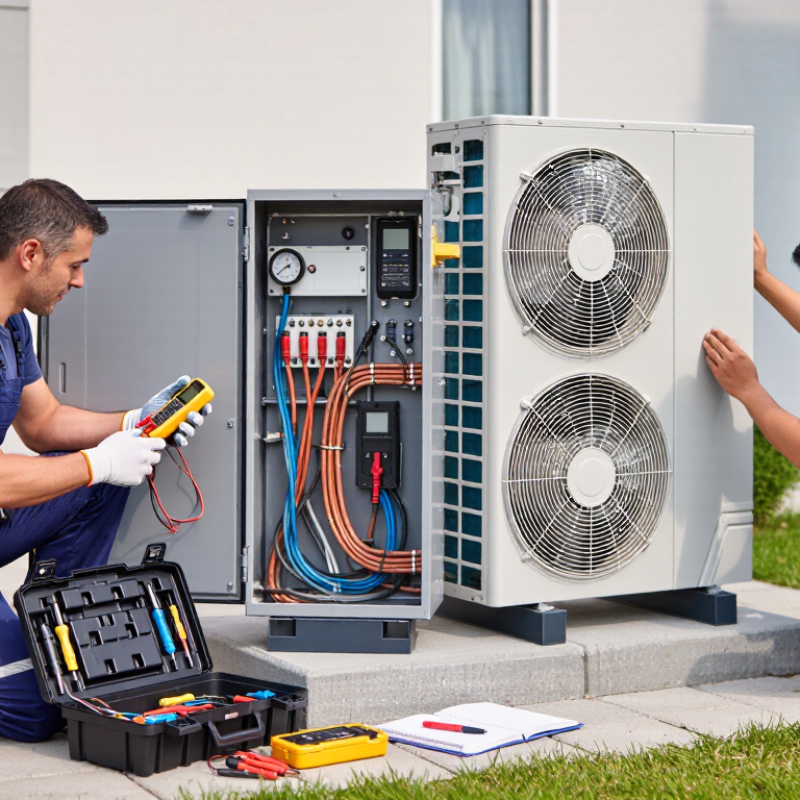
When an EVI heat pump displays an error, record the exact code before resetting the unit. A photo can prevent confusion later. Read the display carefully. Flashing symbols may indicate different problems than steady codes. Check the service manual for the code’s official meaning, because code definitions vary between control systems. Note the outdoor temperature, operating mode, and time of failure. These details help a qualified technician identify patterns instead of guessing.
Several causes can produce similar warnings. A blocked air filter may reduce airflow and trigger high-pressure protection. Ice around the outdoor coil can suggest defrost failure, poor airflow, or unusually wet weather. A sensor code may come from a loose connection, damaged wiring, or an inaccurate sensor.
Low voltage can also interrupt compressor operation. Refrigerant problems require specialized gauges and training. Do not release refrigerant or open sealed circuits yourself.
Start with safe observations. Check that power is stable, vents are open, and snow, leaves, or dirt are not covering the outdoor coil. Listen for unusual fan noise. A single reset may clear a temporary fault, but repeated resets can hide a developing problem. This is where troubleshooting often becomes imperfect. The first suspected cause is not always correct. A qualified technician should test voltage, sensors, airflow, and pressure in a controlled sequence. Keep the error history available. It can reveal whether the fault appears during startup, heating, or defrost cycles.
When an EVI heat pump shows an error code, check the power supply before replacing parts. Measure voltage at the disconnect and controller, not only at the wall outlet. Loose terminals, tripped breakers, and voltage drops can stop the compressor.
The U.S. Department of Energy notes that proper installation and commissioning strongly influence heat pump performance. A small wiring fault can create a large service problem.
Inspect control wires for burns, moisture, crushed insulation, or loose plugs. Turn off power before opening any panel.
Next, examine the temperature and pressure sensors. A sensor covered with dust or poorly attached to the pipe may report false readings. Compare its resistance with the service specification, then check the connector for corrosion.
Inspect high-pressure, low-pressure, flow, and freeze-protection switches.
Never bypass a safety switch to force operation. That shortcut can damage equipment and create unsafe conditions.
The International Energy Agency reports that heat pumps can deliver three to five units of heat for each unit of electricity, but only when controls and airflow work correctly.
Check airflow, refrigerant symptoms, and the outdoor coil after electrical tests pass. Ice, blocked filters, or a stopped fan can trigger protection errors.
Record the code, outdoor temperature, operating sounds, voltage, and restart time. This evidence helps a qualified technician avoid guesswork.
A common mistake is resetting the unit repeatedly. It may clear the display, not the cause.
Fault histories are useful, though they are not always perfect.
Recheck your assumptions.
5 Best Ways to Troubleshoot an EVI Heat Pump Error Code?
An EVI heat pump error code is a clue, not a diagnosis. Record the code, outdoor temperature, operating pressure, and compressor sound. Then check the refrigerant circuit for restricted flow. Look for iced tubing, bubbles in the sight glass, or unusual temperature differences across the expansion device. Refrigerant charging requires proper gauges and trained handling. Never add refrigerant by guesswork.
Inspect the air filter closely. A gray, packed filter can reduce airflow and trigger high-pressure or coil-temperature faults. Clean or replace it, then check whether the indoor fan starts smoothly. Listen for grinding, delayed startup, or uneven airflow from the vents. The outdoor fan also matters. Remove leaves and dust from the grille, but disconnect power before touching the unit. Small blockages can create surprisingly large problems.
Examine the heat exchanger surfaces and surrounding sensors. Dirt between fins limits heat transfer, while bent fins restrict air movement. A soft brush and approved coil cleaner can help, but harsh cleaning may damage delicate parts. Check wiring plugs for looseness, moisture, or discoloration. I have sometimes blamed refrigerant flow too quickly; a weak fan or dirty exchanger was the real cause. Use the service manual for expected temperatures and resistance values. If readings conflict, pause and verify them instead of forcing a repair.
An EVI heat pump error code should guide your checks, not trigger random adjustments. Record the exact code, outdoor temperature, operating mode, and recent maintenance. Small details often reveal whether the fault involves pressure, temperature, communication, or power.
Start at the controller. Confirm the selected heating mode, target temperature, defrost settings, and auxiliary heat limits. Compare each value with the installation manual. Do not guess unfamiliar parameters. A setting that seems efficient may restrict compressor operation or create unstable pressure. Check sensor readings too. A frozen value or sudden temperature jump may indicate a loose connection or damaged sensor. Turn the system off through its controller before inspecting anything.
Reset carefully. Isolate electrical power using the approved disconnect procedure, then wait for the period specified by the manual. Some components retain electrical energy after shutdown. Never remove covers or touch terminals unless you are qualified to do so. Restore power, allow the controller to complete its startup check, and observe the system for several minutes. If the code returns, save the fault history instead of repeatedly resetting it. Repeated resets can hide a developing problem. I have found that rushed troubleshooting often misses a simple wiring issue. That assumption is worth challenging. A licensed technician should test refrigerant pressures, compressor operation, and electrical circuits when basic controller checks fail.
5 Best Ways to Troubleshoot an EVI Heat Pump Error Code?
An EVI heat pump error code is a warning, not a complete diagnosis. Record the code and note when it appears. Check the thermostat setting, indoor filter, outdoor coil, and visible airflow. A dirty filter or blocked coil can trigger protection faults. Power cycling may clear a temporary software issue. It does not repair the cause.
Stop troubleshooting when the breaker trips again, wiring smells hot, or ice covers the coil. Do not open electrical panels or handle refrigerant without proper training. Refrigerant pressure, defrost controls, sensors, and compressor protection require calibrated instruments. The U.S. Department of Energy states that efficient heat pumps can deliver two to four units of heat for each unit of electricity. Poor repairs can quickly erase that advantage. IEA’s 2022 heat pump market report recorded an 11% rise in global sales, increasing the need for skilled service.
Call a qualified heat pump technician when the code returns after a reset, heating remains weak, or the outdoor fan behaves strangely. Ask for a written diagnosis, measured temperatures, electrical readings, and repair options. In the United States, EPA Section 608 rules require certification for technicians handling regulated refrigerants. Other regions have similar requirements. A technician should also inspect airflow before blaming the compressor. That step is sometimes skipped. My own practical warning is simple: a quiet system is not always a healthy system. Strange clicking, repeated defrosting, or rising electricity use deserves professional attention.
Record the code, outdoor temperature, sounds, voltage, and restart time. Check the thermostat, filter, outdoor coil, and visible airflow. The code is a warning, not a full diagnosis.
Yes. Check voltage at the disconnect and controller, not only at the wall outlet. Loose terminals, tripped breakers, and voltage drops can stop the compressor.
Inspect control wires for burns, moisture, crushed insulation, or loose plugs. Turn off power before opening any panel. Small wiring faults can create major service problems.
Dust or poor contact can make a temperature sensor report incorrect readings. Compare its resistance with the service specification. Check connectors for corrosion or looseness.
No. Never bypass high-pressure, low-pressure, flow, or freeze-protection switches. That shortcut can damage equipment and create unsafe conditions.
Yes. Dirty filters, ice, blocked coils, or a stopped outdoor fan can cause faults. Look for weak airflow and unusual frost around the outdoor coil.
Power cycling may clear a temporary control issue. It does not repair the cause. Repeated resets can hide an ongoing problem. Recheck your assumptions.
Stop when the breaker trips again, wiring smells hot, or ice covers the coil. Call a technician if the code returns or heating remains weak. Strange clicking and repeated defrosting also deserve attention.
Ask for a written diagnosis, measured temperatures, electrical readings, and repair options. Request an airflow inspection before blaming the compressor. That step is sometimes skipped.
Refrigerant work and electrical-panel repairs require proper training and calibrated instruments. Local rules may require technician certification. A quiet system is not always a healthy system.
Learning how to troubleshoot an EVI heat pump error code starts with identifying the exact code and considering what it may indicate, such as a power issue, sensor fault, restricted airflow, or abnormal system pressure. Begin by checking the electrical supply, wiring connections, sensors, and safety switches for visible damage or loose contacts. Then inspect filters, fans, refrigerant flow, and heat exchanger components, since dirt, blockages, or poor airflow can trigger protection alarms and reduce heating performance.
Next, review the controller settings to confirm that operating temperatures, modes, and timing are appropriate. If the system allows it, switch it off safely, wait for stored power to discharge, and reset it according to the unit’s instructions. Monitor whether the error returns after restarting. If the code persists, unusual noises or odors appear, or refrigerant and electrical components require testing, stop operating the heat pump and contact a qualified technician for safe diagnosis and repair.

PeakWay Pump